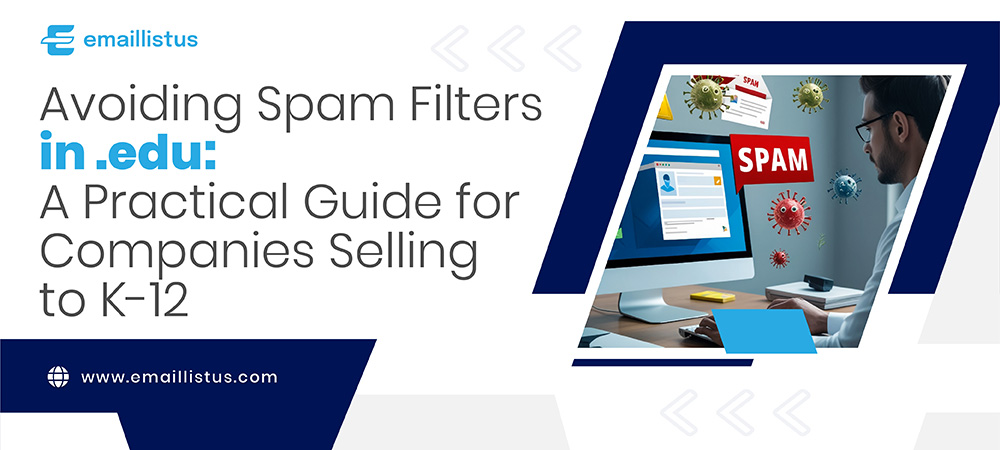
Reaching K-12 decision-makers through email remains one of the most effective marketing channels—but also one of the most misunderstood. Many companies assume that if their message is relevant, it will reach inboxes. In reality, school district email systems are among the most aggressively filtered environments, often blocking or diverting legitimate outreach before it is ever seen.
If your campaigns to .edu or district domains are underperforming, it’s rarely about your product—it’s about deliverability. Understanding how to navigate spam filters in the K-12 ecosystem can dramatically improve your results.
Why K-12 Email Systems Are Different
School districts operate under strict cybersecurity policies. With increasing threats like phishing, ransomware, and data breaches, IT departments deploy advanced filtering systems that go beyond traditional spam detection.
These systems evaluate:
- Sender reputation
- Domain authentication (SPF, DKIM, DMARC)
- Email engagement history
- Content patterns
- Sending behavior (volume, frequency, spikes)
For example, a curriculum vendor sending 50,000 emails in one day to district domains without prior engagement is likely to be flagged—even if the content is relevant.
The Foundation: Authentication and Infrastructure
Before thinking about messaging, your technical setup must be solid.
SPF, DKIM, and DMARC are non-negotiable.
Without proper authentication, your emails may be rejected outright or routed to spam.
Example:
A company selling STEM kits improved inbox placement by 28% simply by tightening their DMARC policy and aligning their sending domain with their visible “From” address.
Additionally, avoid sending from generic domains or newly created domains with no history. School systems heavily penalize “cold” domains.
Warming Up Your Sending Domain
K-12 filters are highly sensitive to sudden spikes in volume. If you’re launching a campaign, you need to build trust gradually.
Best practice:
- Start with small batches (500–1,000 emails/day)
- Gradually increase over 2–3 weeks
- Prioritize highly targeted segments first
Example:
Instead of blasting all districts nationwide, begin with a segment like “Assistant Superintendents in Texas.” Engage that group first, then expand.
This creates a positive engagement footprint—opens, replies, clicks—that signals legitimacy.
Targeting Matters More Than Volume
One of the biggest mistakes companies make is over-broad targeting.
K-12 buyers are highly segmented:
- Superintendents focus on strategy and budgets
- Principals care about implementation and outcomes
- IT Directors evaluate compatibility and security
Sending the same message to all of them reduces engagement—and low engagement is a major spam trigger.
Example:
A software company saw a 2x increase in inbox placement when they split campaigns:
- IT-focused messaging for technology directors
- Outcome-based messaging for principals
Higher relevance led to higher engagement, which improved deliverability.
Content That Passes Filters
Spam filters don’t just scan for obvious keywords—they evaluate patterns.
Avoid:
- Overuse of promotional language (“Buy now,” “Limited time”)
- Excessive capitalization
- Too many links or images
- Attachments (especially PDFs)
Focus on:
- Clear, professional language
- Plain-text or lightly formatted emails
- One primary call-to-action
Example:
Compare these two approaches:
❌ “Transform your school NOW with our revolutionary platform!!!”
✅ “Helping districts streamline attendance tracking with fewer manual steps”
The second version is more aligned with how educators communicate—and less likely to trigger filters.
Engagement Is Your Biggest Asset
K-12 email systems track how recipients interact with your emails.
Positive signals:
- Opens
- Replies
- Forwarding
- Adding you to contacts
Negative signals:
- Deletes without opening
- Marking as spam
- Ignoring multiple emails
Example:
If your first email generates replies—even simple ones—it dramatically increases the chances your next email lands in the inbox.
Tip:
Encourage light engagement early:
- Ask for feedback
- Offer a quick resource
- Use a conversational tone
Timing and Frequency
K-12 professionals operate on unique schedules:
- Early mornings (7:00–9:00 AM) are high-engagement windows
- Avoid late evenings and weekends
- Be mindful of school calendars and holidays
Over-emailing is another common issue. Sending too frequently without engagement can hurt your sender reputation.
Best cadence:
- 1–2 emails per week per segment
- Adjust based on engagement
Clean Data = Better Deliverability
Outdated or inaccurate email data is a hidden killer of deliverability.
High bounce rates signal poor list quality, which damages your domain reputation.
Example:
A vendor reduced bounce rates from 12% to under 2% by cleaning their database and removing inactive contacts. This alone improved inbox placement significantly.
Make sure your data is:
- Regularly updated
- Validated
- Segmented correctly
The Role of Consistency
Consistency builds trust—not just with recipients, but with spam filters.
- Use the same sending domain
- Maintain consistent volume patterns
- Keep branding and messaging aligned
Jumping between domains or drastically changing sending behavior can reset your reputation.
Putting It All Together
Avoiding spam filters in the K-12 market isn’t about tricks—it’s about alignment.
Alignment between:
- Your technical setup
- Your targeting
- Your messaging
- Your sending behavior
Companies that succeed treat email as a long-term channel, not a one-time blast.
Ensure your marketing efforts reach the heart of educational decision-making by connecting directly with school principals, superintendents, and other pivotal influencers. Our Build a List platform is your gateway to accurate, updated K12 data, providing exclusive access to over 1000 school and district personnel, including principals and superintendents, plus contacts from 500+ colleges and universities. Dive into our Build a List section now and begin forging invaluable connections with the leaders shaping the future of education.