Introduction: The Gatekeeper Effect in K-12 Marketing
If you’ve ever sent an email to a school district and wondered why it never got opened, you’re not alone. Many education vendors believe that the district superintendent or purchasing director is personally reading their outreach—but in reality, your message passes through multiple filters before it reaches the right person. Understanding who actually reads your email, and how information flows inside a district office, can make or break your K-12 marketing strategy.
The Reality of the District Inbox
District inboxes are flooded daily with hundreds of emails—from curriculum vendors, technology companies, grant notifications, and internal communications. The average administrator receives over 100 emails per day, but only a small fraction ever get opened. What determines whether your message is seen often has less to do with your offer and more to do with who handles the inbox and how the district’s communication hierarchy works.
In many districts, decision-makers delegate their inbox management to executive assistants, department secretaries, or special project coordinators. These staff members act as digital gatekeepers—skimming subject lines, scanning sender names, and deciding what gets forwarded and what gets trashed.
Step 1: Map the District’s Decision Chain
Every district has a unique communication workflow, but there are patterns across most K-12 systems:
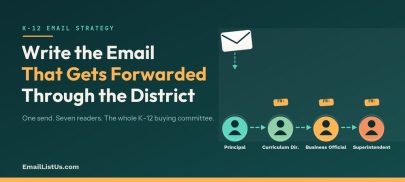
- Administrative Assistants and Coordinators: These professionals are often the first to see your email. Their job is to protect the decision-maker’s time. If your email seems irrelevant, overly “salesy,” or not aligned with district priorities, it’s deleted instantly.
- Mid-Level Directors and Specialists: If your content relates to a specific area (e.g., curriculum, IT, transportation, student services), assistants often forward it to these directors for review. These are your first real evaluators.
- Executive Leadership (Superintendents, CFOs, Assistant Superintendents): They see only a filtered selection of emails—often the ones approved by their directors or referred internally after some validation.
Tip: Before you launch a campaign, identify which department would be most interested in your product, and tailor your messaging for both the gatekeeper and the end decision-maker.
Step 2: Write for Two Audiences
Most marketing emails fail in K-12 because they assume there’s only one reader. In reality, you have two:
- The Screener – They decide if your email gets opened or forwarded.
- The Decision-Maker – They decide if your offer is worth a meeting or a purchase.
To get past the screener, make your email instantly understandable. Use a clear subject line that signals relevance (“Supporting STEM goals with no-cost pilot program”) and avoid marketing jargon (“innovative solutions to transform education”).
Once your email is opened, the decision-maker will scan for evidence, credibility, and value. This means short paragraphs, a district-relevant case study, or one sentence explaining how your product impacts student outcomes or saves staff time.
Step 3: Timing and Context Matter
Districts operate on strict annual cycles—budgets, testing windows, and board approvals shape when decisions happen. Even the best-crafted email can fail if sent during state testing week or budget freeze periods.
Best windows to email:
- August–September: Start-of-year purchasing and pilot evaluations
- January–March: Mid-year reviews and early budgeting for the next school year
- April–May: End-of-year budget utilization and planning
Avoid sending emails during holidays, testing, or the first and last week of the school year. Timing can double your open rates.
Step 4: Craft a District-Friendly Message
Here’s what the people inside the district office actually want to see in an email:
- Purpose clarity: A single, specific reason for contacting them
- Proof of value: Results from other districts, testimonials, or measurable impact
- Low friction: Easy next step (e.g., “Schedule a 10-minute demo” or “Request sample lesson plans”)
- Educational framing: Position your message as helping schools, not selling to them
The tone matters. Educators are wary of aggressive sales tactics, but they respond positively to professional, student-centered language. For instance:
✅ “Helping districts improve attendance tracking”
❌ “Boost your ROI with our revolutionary software!”
Step 5: Segment by Role and Responsibility
Not everyone in a district thinks the same way. Tailor your content to specific job roles:
- Superintendents: Focus on outcomes, district-wide impact, and funding alignment.
- Curriculum Directors: Emphasize student performance, teacher adoption, and standards alignment.
- IT Directors: Highlight compatibility, security, and data privacy.
- Finance Officers: Stress cost-efficiency, compliance, and long-term ROI.
By segmenting your list and adjusting your message accordingly, you’ll dramatically improve response rates—and demonstrate respect for how districts operate.
Step 6: Follow-Up the Right Way
Persistence pays off—but not through spam. District staff often appreciate polite, value-driven follow-ups that acknowledge their time. Instead of “Just checking in,” try:
“I know many districts are finalizing next year’s technology plan. Would you like a quick overview of how [product] is helping similar districts streamline [specific goal]?”
Spacing your follow-ups 5–7 business days apart keeps your brand visible without overwhelming their inbox.
Step 7: Use Verified Education Email Lists
The foundation of every successful K-12 email campaign is data accuracy. Many companies buy cheap, outdated lists filled with retired staff, invalid domains, or generic inboxes (like info@district.org). That’s why using a verified, segmented education email list is crucial.
High-quality lists, like those from EmailListUs.com, include verified contacts—superintendents, principals, technology directors, curriculum specialists, and more—across all districts and schools in the U.S. Clean data ensures higher deliverability, lower bounce rates, and better engagement.
Make the Gatekeeper Your Ally
When you understand how the district office works, your emails stop feeling like cold outreach and start feeling like professional communication. The secret isn’t tricking gatekeepers—it’s earning their trust. If your subject line is clear, your content relevant, and your tone respectful, they’ll open the door to the real decision-makers for you.
The more you align your campaigns with how districts think and operate, the more your emails will be read—not just received.
Ensure your marketing efforts reach the heart of educational decision-making by connecting directly with school principals, superintendents, and other pivotal influencers. Our Build a List platform is your gateway to accurate, updated K12 data, providing exclusive access to over 1000 school and district personnel, including principals and superintendents, plus contacts from 500+ colleges and universities. Dive into our Build a List section now and begin forging invaluable connections with the leaders shaping the future of education.