When it comes to marketing to K-12 schools and districts, email remains one of the most effective channels. Yet, for many companies, their emails never make it past the principal’s cluttered inbox or the district administrator’s morning scroll. The problem isn’t always the product—it’s the approach.
In education marketing, tone, timing, and targeting make the difference between a deleted message and a long-term customer relationship.
Below, we break down the most common mistakes companies make when emailing educators—and how to fix them for higher engagement, stronger trust, and more conversions.
1. Mistake #1: Generic Subject Lines That Sound Like Spam
Subject lines are your first impression. Too often, companies use vague or overly promotional subject lines like “Save Now!” or “Introducing Our New Solution!” These may work in consumer marketing but not in education, where time is precious and trust is earned.
Fix: Focus on clarity and relevance. Use subject lines that speak directly to educators’ needs and priorities. Instead of “Special Offer,” try “How Districts Are Simplifying Classroom Tech Integration” or “3 Ways Schools Are Using [Product Name] to Boost Engagement.” The goal is to sound helpful, not salesy.
2. Mistake #2: No Educational Value
Educators respond to messages that teach, not just sell. Sending emails that push a product without offering any insight or value is a fast track to unsubscribes.
Fix: Position your product as part of the solution to a problem schools already care about—like improving student outcomes, streamlining admin processes, or saving time. Include tips, case studies, or resources that genuinely help. Remember, in K-12, value first, sales second always wins.
3. Mistake #3: Wrong Contact Segments
Many campaigns fail because they’re sent to the wrong audience. Superintendents, principals, and teachers have very different roles and priorities. Sending a “classroom resource” email to a district-level buyer is wasted effort.
Fix: Use a segmented and verified database like EmailListUS, where contacts are categorized by role, department, grade level, and district demographics. Tailor your content for each group—administrators care about budgets and implementation; teachers care about classroom outcomes. Relevance drives response.
4. Mistake #4: Overlooking Timing and Seasonality
Timing is everything. Many companies blast their campaigns in mid-summer or right before holidays—times when educators are offline.
Fix: Align your calendar with the school year. Key buying periods are typically February–April (planning for next year) and August–September (implementation and training). Avoid busy testing seasons or holidays. Schedule your campaigns when educators are thinking strategically, not when they’re drowning in to-dos.
5. Mistake #5: Overloading the Message
Educators are inundated with information daily. A long, text-heavy email or one crammed with multiple CTAs will lose their attention fast.
Fix: Keep it concise. Lead with one strong idea or benefit, supported by a visual or testimonial. Aim for 150–200 words maximum and one clear action step—such as “Download our case study” or “Book a 10-minute demo.” Respect their time, and they’ll reward you with attention.
6. Mistake #6: Ignoring Mobile Optimization
Over half of educators now check emails on mobile devices—often between meetings or during commutes. If your email design isn’t responsive, it’s already doomed.
Fix: Use mobile-friendly templates with clean design, clear headlines, and buttons large enough to tap easily. Test every campaign on both desktop and mobile before sending. A great message can fail simply because it wasn’t formatted for how people actually read.
7. Mistake #7: Weak Call-to-Action (CTA)
Many emails end vaguely: “Learn more on our website” or “Contact us for details.” That’s not enough.
Fix: Give your readers a clear and specific next step—something small, valuable, and low-friction. “See how one district cut costs by 20%,” “Watch our 90-second demo,” or “Get the free teacher guide” are much stronger CTAs because they promise immediate, tangible value.
8. Mistake #8: No Personalization
Educators expect messages that recognize their unique needs. A principal in Florida doesn’t face the same challenges as a curriculum director in Michigan.
Fix: Use personalization beyond just the first name. Reference the school type, location, or known pain points. Example:
“Many Florida districts are preparing for the 2025-26 funding shift—here’s how [Product] is helping schools like yours adapt.”
When personalization connects to context, it drives engagement.
9. Mistake #9: No Follow-Up Strategy
One email isn’t enough. Decision-making in education can take months, and many vendors quit too early.
Fix: Plan a nurturing sequence—start with education, then credibility, then conversion. Send follow-ups every 7–10 days with fresh value (a case study, webinar invite, or resource). Consistency builds recognition and trust over time.
10. Mistake #10: Not Tracking or Optimizing Performance
Without tracking, you can’t improve. Too many companies send emails without measuring open rates, clicks, or conversions.
Fix: Monitor metrics and test variables like subject lines, send times, and audience segments. Use data to guide your strategy—not assumptions. When you understand what resonates, you can refine every future campaign for higher ROI.
The Takeaway
Educators are not ordinary B2B prospects. They’re mission-driven professionals, cautious buyers, and relationship-oriented decision-makers. To earn their trust, your emails must offer relevance, timing, and authenticity.
Start with a clean, verified, and segmented database from a trusted source like EmailListUS.com—then craft messages that respect educators’ time and intelligence. The payoff isn’t just higher open rates—it’s partnerships that last for years.
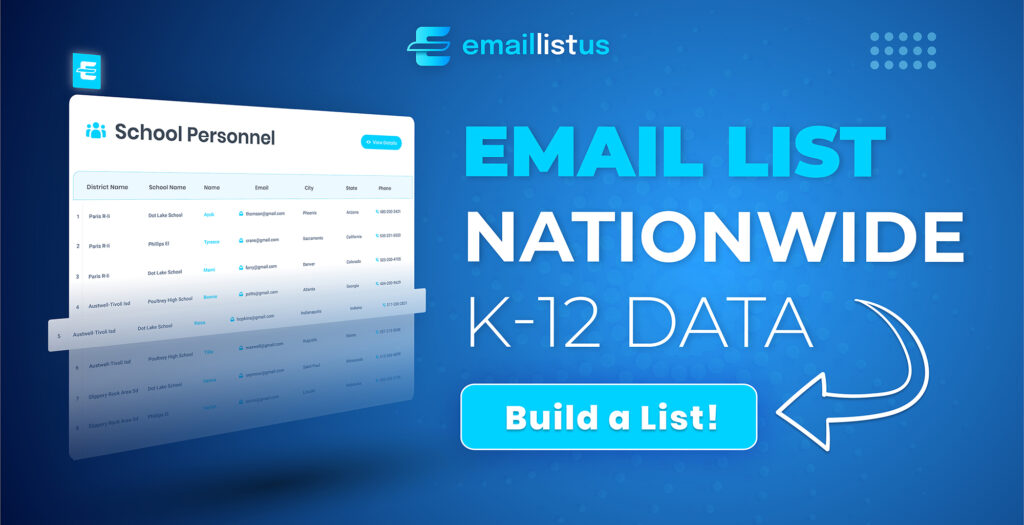
Ensure your marketing efforts reach the heart of educational decision-making by connecting directly with school principals, superintendents, and other pivotal influencers. Our Build a List platform is your gateway to accurate, updated K12 data, providing exclusive access to over 1000 school and district personnel, including principals and superintendents, plus contacts from 500+ colleges and universities. Dive into our Build a List section now and begin forging invaluable connections with the leaders shaping the future of education.